
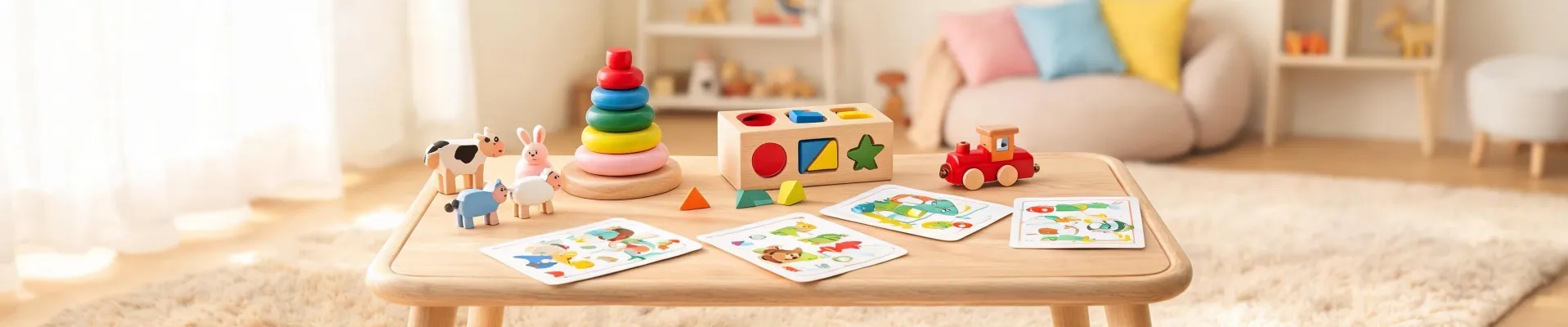
Why a Hape Wooden Toy May Beat Baby Einstein Piano Sheet Music
2026-08-24 by Miriam Adler
Picture this: it's 9 p.m., and you're searching 'Baby Einstein Magic Touch Piano sheet music' while your toddler sleeps. The results are dead links and blurry song cards. The toy's tiny keyboard plays preset melodies, but no traditional sheet music matches its keys. The search feels like a dead end — but the real question is what kind of music experience fits your child's play.
The Sheet Music Search That Started It All
Over the next hour, the scene keeps repeating. You click a promising link that promises 'Baby Einstein Magic Touch Piano song cards,' only to land on a fan-made PDF with a melody that doesn't line up with the toy's small keys. The piano has only a few keys, maybe a one-octave range, so every classic children's song you try sounds wrong halfway through. Your toddler, who was excited for the first week, now pushes the buttons twice and wanders off. What you want is to teach 'Twinkle, Twinkle' or 'Old MacDonald' from a printed sheet, the way you learned piano as a child. But the toy wasn't designed to be read from notation; it was designed to play built-in tunes. The more you search, the clearer it becomes that the sheet music for this toy essentially doesn't exist, because the toy itself was never meant to be played from a score. This is the moment to stop hunting and ask a different question: what kind of musical play does your child actually respond to?
Consider what your child does when the preset songs end. Does she reach for the buttons again, or does she start banging on the table? That instinct is the clue. Hape, a separate wooden-toy brand, has built its music line around that impulse. As the company puts it, 'Pixelz Music transforms playtime into an energetic world of rhythm and imagination.' That's not a slogan you can paste onto the Baby Einstein keyboard, because the two toys work on different principles. The piano plays for your child; a Hape instrument waits to be played by your child. The fork in the road is not 'where are the sheets?' but 'does my child want to listen or create?'
What 'Music Toys' Actually Offer
If you're worried that a wooden toy can't be educational, Hape's track record argues otherwise. The company's toys are made from sustainably sourced wood and non-toxic paint, and they are used in more than 5,000 schools worldwide. Hape has also won over 300 international awards, including the Red Dot Design Award and the Spiel Gut certification. That combination matters because it means the brand's products are not just pretty blocks; they're tested against rigorous educational and safety standards. It also corrects a common assumption: Hape is not a Baby Einstein sub-brand. It's an independent company with its own philosophy about how children learn through play. Where Baby Einstein focuses on exposure to sounds and songs, Hape focuses on open-ended manipulation — which is exactly what a child who drums on the table is asking for.
Look at what Hape actually makes. The Pound & Tap Bench with Slide Out Xylophone is a wooden bench where a child pounds balls with a mallet, each ball landing on a xylophone key. The Blues Harmonica is a 10-hole wooden wind instrument. These toys don't play melodies for you; they require the child to produce the sound. So the comparison sharpens. The Baby Einstein piano gives preset songs at the touch of a key. A Hape bench gives a note at the tap of a mallet — and the child decides what comes next. If your child's style is 'press and listen,' the electronic piano fits. If it's 'hit and see,' a Hape instrument is the honest match.
When an Electronic Piano Wins (and When It Doesn't)
Age is the first condition. For a two- or three-year-old, the part of the brain that connects cause and effect is developing fast. When she taps a xylophone key and hears a note, she learns that her action creates the sound. That's a richer feedback loop than pressing a button that plays a pre-recorded tune, because the tune is the same every time. Hape's Pixelz Music line is built around rhythm and imagination. Rhythm, not melody, is what young children grasp first. They clap, stomp, and bang before they sing in tune. A wooden instrument that responds to force and timing teaches them that music is something they make, not something that comes out of a speaker. The Baby Einstein piano, by contrast, encourages pressing and listening, which is a more passive activity for a toddler.
The second condition is material and durability. Hape's toys are made from sustainably sourced wood and non-toxic paint, which matters when a toddler chews on anything within reach. That level of school adoption suggests the toys can survive rough use, something a flimsy plastic keyboard often can't. If you're comparing the two, think about how your child treats objects. Does she throw things? Does she chew? A wooden bench with a mallet is heavier and sturdier than a battery-operated piano with small buttons. It also doesn't need batteries, so there's no 'screen time' issue or dead-battery meltdown. The condition that tips the scales is whether your child's play style is gentle and observational or physical and exploratory. For physical explorers, wood wins on safety and toughness.
Why the Case Family Chose Hape
Take the Chen family. Their two-year-old, Leo, had a Baby Einstein piano. The first week, he loved pressing buttons to hear 'Twinkle, Twinkle.' By the third week, he was pushing it aside and banging on the table with a wooden spoon. His parents searched for sheet music and found nothing usable, so they tried the Hape Pound & Tap Bench, which they'd seen alongside the Blues Harmonica. The change was immediate. Leo spent twenty minutes pounding balls and listening to each note ring. Knowing Hape's track record in schools and awards gave the Chens confidence. They weren't replacing a piano; they were replacing a playback device with an instrument.
The decision rule that emerged from the Chens' experience is simple. Ask two questions. First: does your child get more joy from pressing a button and hearing a familiar tune, or from making their own noise? Second: are you more concerned about exposure to melodies or about fostering hands-on creativity? If the answers lean toward 'making noise' and 'creativity,' choose an open-ended wooden instrument from a brand like Hape. Those figures are there as reassurance that the choice is backed by professional use and international recognition. If the answers lean toward 'pressing buttons' and 'exposure,' then the electronic piano is fine for now — just don't expect sheet music to fix what it doesn't claim to do. The rule is about matching the toy to the child's interaction style, not to the brand name.
Back to the Piano Bench
Now picture the piano corner eight weeks later. The Baby Einstein piano sits in a closet; the Hape Pound & Tap Bench is on the rug. Leo doesn't just press buttons anymore; he slides the xylophone out and taps it with different mallets, experimenting with loud and soft. His grandmother, a piano teacher, noticed he was keeping a steady beat — something she'd never seen with the electronic toy. Hape's Pixelz Music philosophy describes what's happening. The toy put the rhythm in Leo's hands. The sheet music search became irrelevant because Leo stopped needing a fixed melody to make music.
The reusable rule is this: when you catch yourself hunting for sheet music for a toy that plays music, pause and ask whether the toy is letting your child create music or only play it back. If the toy only plays back, the missing sheets are probably not the real problem — the real problem is the interaction model. For toddlers, rhythm comes before reading notes, and wooden instruments like Hape's Pound & Tap Bench put that rhythm directly in their hands. Match the toy to how your child already plays, and you'll spend less time searching and more time listening to music they make themselves. That's the decision rule that works at any bench.
So tonight, if the search bar still turns up nothing, listen to the kitchen counter instead. The rhythm your child makes with a wooden spoon may be the sheet music you were looking for.
Miriam Adler
Miriam Adler is an educational and STEM toy analyst specializing in busy boards, Montessori-style manipulatives, learning towers, sound books, reading pens, pretend-play sets, and early learning toys. She applies ASTM F963 and IEC 62115 methods while evaluating small-part hazards, accessible edges, switch durability, sound output, battery access, pull force, and age-appropriate task complexity. Her work helps parents, retailers, and product teams choose learning products that align developmental goals, supervision needs, interaction design, and the intended age stage.